
Summary
CU Boulder’s homepage is a high-traffic entry point for diverse audiences, but constantly shifting content and dense navigation make it difficult for users to build intuition about where to find key information. Our team evaluated the homepage through a structured survey approach and comparative analysis, then delivered recommendations to improve content relevance, navigation clarity, and consistency for prospective and current students.
My Role
I led the project as a student project manager while acting as the UX research lead; driving the work from stakeholder alignment through final reporting.
- Identified and engaged institutional stakeholders in Strategic Relations & Communications
- Defined research goals, primary audiences, and success criteria
- Shaped survey strategy (comparable, low-bias question design)
- Coordinated team execution and synthesis across research streams
- Documented insights and delivered a recommendations report to stakeholders
The Challenge
As frequent users of the CU homepage, our team noticed real friction. Turning that observation into institutional action required stakeholder trust, clear scope, and evidence. The homepage content changes frequently, the menu is large and overwhelming, and navigation does not persist as users scroll, making it easy to “lose” your path.
This became a turning point for me: it was my first experience building momentum around a UX problem, aligning stakeholders, and delivering a structured research output that could support decision-making.
Study approach
Method
- Type: Survey research + comparative analysis
- Primary audiences: Prospective students, current students, and faculty
- Inputs: Stakeholder guidance + analytics highlights + user feedback
- Question design: Likert-scale and multiple choice to reduce bias and enable comparability
What we evaluated
- Content relevance and “what users come to the homepage to do”
- Ease of navigation and information discoverability
- Consistency and clarity of homepage structure over time
- Where users get overwhelmed or lose their place
Project artifacts
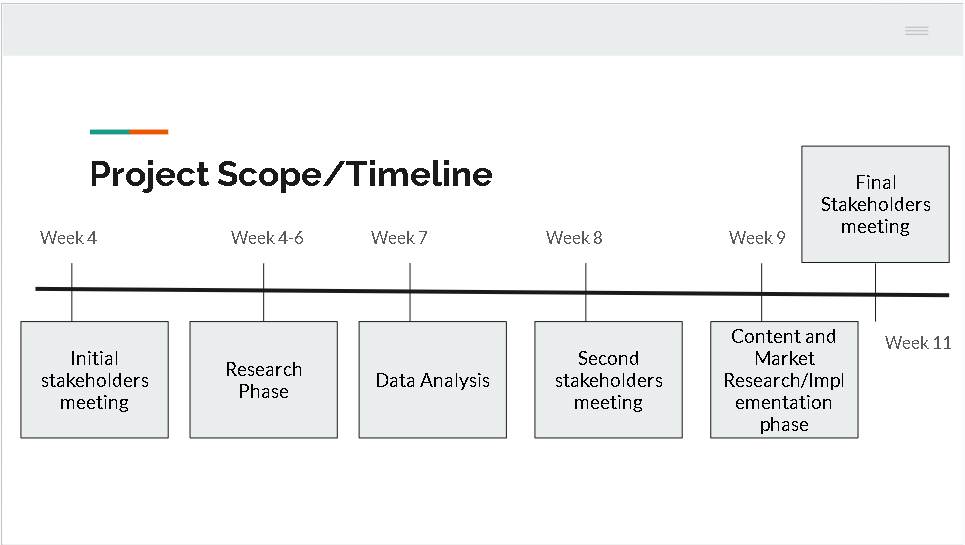
This case study is supported by a proposal deck and a final consulting report that includes methods, stakeholder context, findings, and recommendations.
Evidence
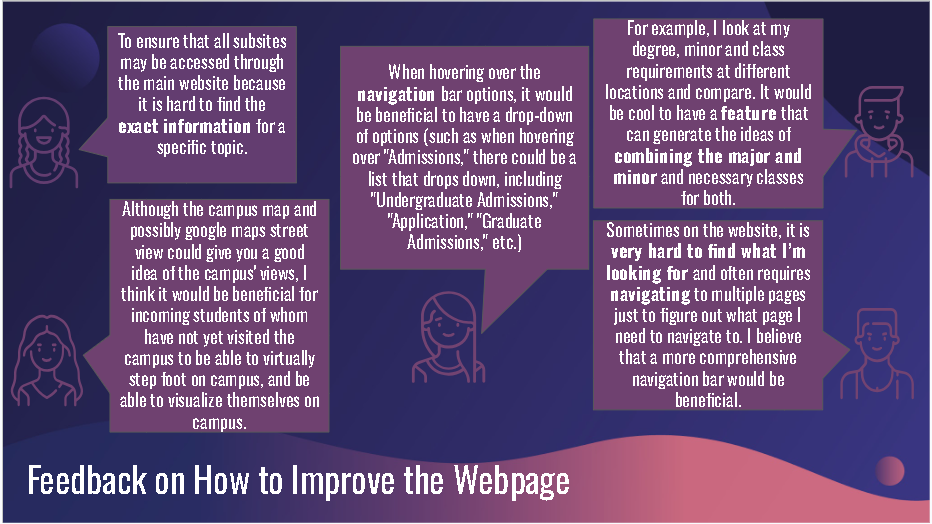
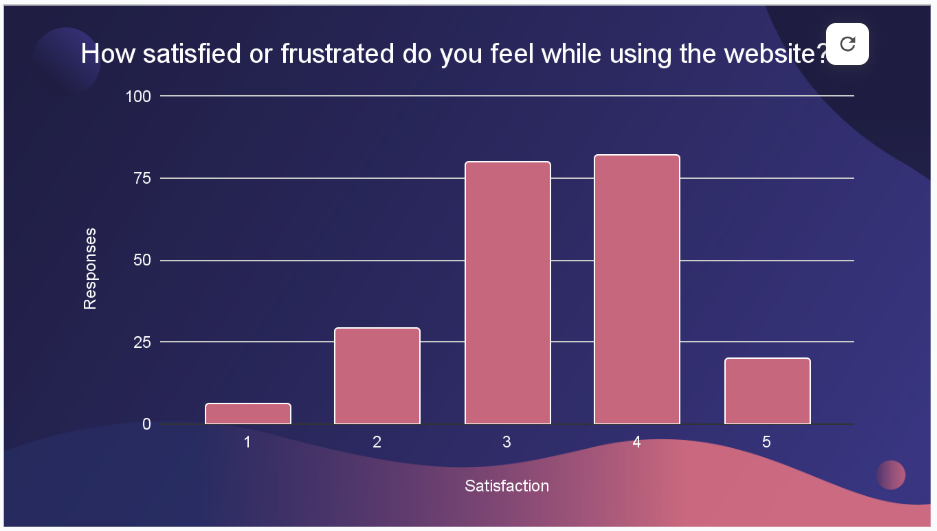
To move this from “we think the homepage is hard to use” to an actionable institutional recommendation, we paired direct user comments with survey data. The feedback themes capture real-world moments of confusion (finding degree requirements, navigating subsites, losing context), and the survey results show broader satisfaction and friction patterns. This evidence became the foundation for the final set of prioritized recommendations delivered to CU stakeholders.
Key insights
Homepage inconsistency makes it hard to build intuition
Rotating content and shifting audience focus may be flexible, but it can reduce predictability. Users don’t feel confident about where key information “lives.”
Navigation is dense and easy to lose
Large menus and long link lists can overwhelm users, and when navigation doesn’t stay available while scrolling, users can get “stranded” mid-page.
Information is distributed across many pages/domains
Users often need programs, tuition, scheduling, and admissions info; when these are spread across many areas without clear grouping on the homepage, discoverability drops.
Content relevance needs a clearer “priority lane”
Users come with concrete tasks (requirements, costs, clubs, schedules). A homepage that prioritizes time-sensitive announcements without a stable task-based structure can miss what many users need most.
Recommendations delivered
Create clearer, task-oriented navigation groupings
Reduce overwhelm by organizing links around what users come to do (academics, admissions, costs, student life), rather than long mixed lists.
Increase consistency to support repeat users
Keep core homepage structure stable over time so users can build confidence and locate key information quickly, even as featured content rotates.
Improve wayfinding so users don’t lose their place
Support navigation persistence and clearer cues so users can move through the homepage without feeling “stuck” or needing to scroll back to the top.
Prioritize content relevance for primary audiences
Balance announcements with stable “high-need” content pathways for students and prospective students (programs, requirements, costs, and key resources).
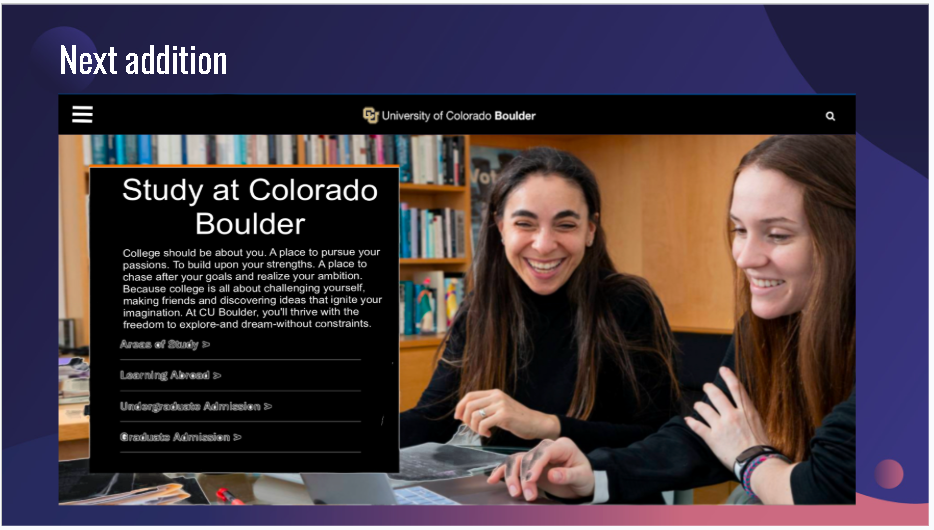
Artifact: Improving the CU Today News module
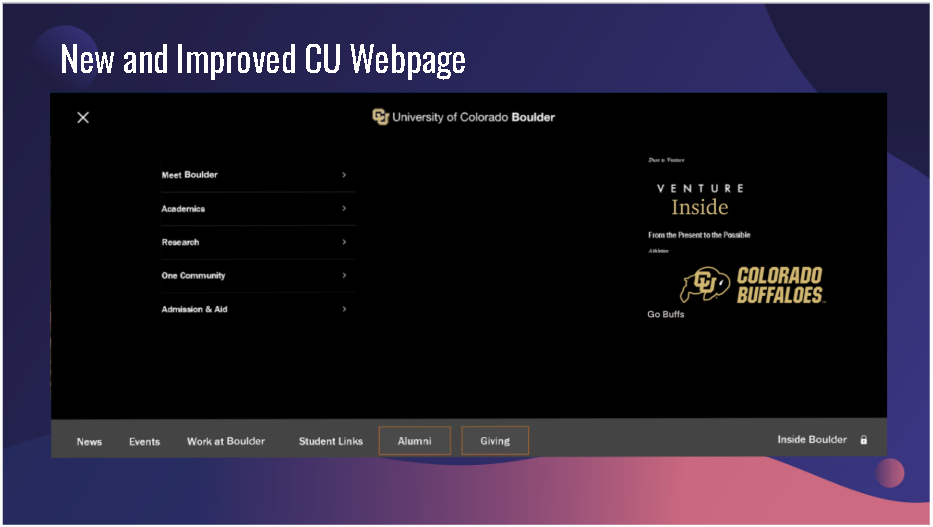
Survey responses and open-ended feedback revealed that users often overlooked the “CU Boulder Today News” section or found it disconnected from their primary tasks. Participants noted difficulty navigating between articles, locating related resources, and understanding how to take further action after reading a headline. Based on this feedback, we analyzed the existing module and proposed structural improvements to increase clarity, scannability, and engagement.
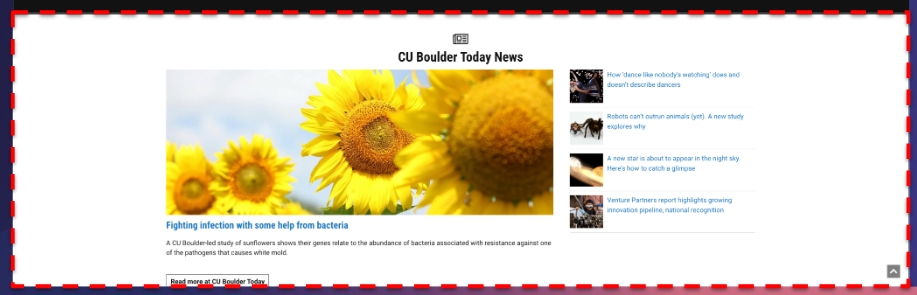
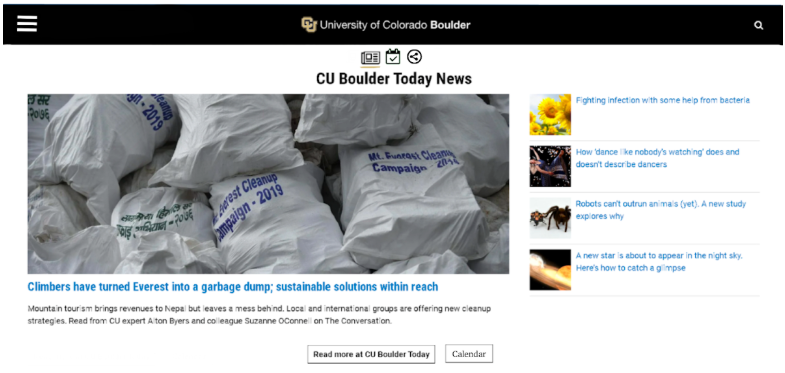
While this was a recommendation artifact rather than a fully implemented redesign, it demonstrates how user feedback translated directly into concrete interface improvements that could support stronger content engagement and usability.
Reflection
This project was the start of my transition into UX research and stakeholder-driven problem solving. I learned how to move from “I’m noticing an issue” to “here’s the evidence, here’s who it impacts, and here’s what we recommend.” It also reinforced that meaningful UX work often begins with aligning the right stakeholders and building a case that’s grounded in user needs.